

Enterprise project managers face a confusing landscape of methodologies claiming to deliver success. Yet Agile projects achieve higher success rates when executed with discipline, while traditional approaches still dominate many organizations. The gap between methodology selection and actual delivery performance costs enterprises millions annually in failed initiatives. This guide cuts through the noise to help you choose the right approach, leverage proven digital tools, and overcome common pitfalls that derail complex projects. You'll discover how leading organizations achieve measurable ROI while enhancing team collaboration and delivery speed.
Table of Contents
- Key takeaways
- Understanding core project management methodologies
- Scaled Agile framework and enterprise transformation methodologies
- Leveraging digital tools to boost project success and collaboration
- Addressing common project management challenges in complex enterprises
- Explore Zennendo for evolved project management
- Frequently asked questions about project management
Key Takeaways
| Point | Details |
|---|---|
| Hybrid methods work | Hybrid approaches combine Waterfall governance with Agile execution to address complexity in large projects while preserving structure and flexibility. |
| SAFe scalability | Scaled Agile Framework coordinates many teams with alignment and cadence through program increments and value streams. |
| Discipline drives Agile | Agile delivers higher success rates when teams maintain discipline, ownership, and clear priorities. |
| Tooling boosts ROI | Digital tools like Asana and Smartsheet streamline workflows and deliver measurable return on investment. |
Understanding core project management methodologies
Choosing the right project management approach determines whether your team delivers on time or struggles with missed deadlines and budget overruns. Each methodology serves different project contexts and organizational maturity levels.
Waterfall is linear and best for fixed requirements projects. This sequential approach works when you know exactly what you're building from day one. Construction projects, regulatory compliance initiatives, and hardware development benefit from Waterfall's predictability. You complete each phase before moving forward, which creates clear milestones but offers limited flexibility for changes.
Agile transforms how teams handle uncertainty and evolving requirements. Instead of planning everything upfront, you work in short sprints to deliver incremental value. Agile projects have higher success rates but need discipline to avoid common pitfalls. Software development, product innovation, and customer-facing initiatives thrive under Agile when teams maintain strong ownership and clear priorities.
Hybrid methods combine Waterfall governance with Agile execution and are rising in usage. This balanced approach gives you structured planning phases followed by iterative delivery cycles. Large enterprises managing complex initiatives with multiple stakeholders find hybrid particularly effective. You get the accountability of traditional project management with the adaptability of modern frameworks.
The Scaled Agile Framework takes Agile principles and applies them across multiple teams working on interconnected initiatives. SAFe benefits and practices enable coordination at scale while preserving team autonomy. Organizations with 50 or more people working on related products need this level of structure to maintain alignment.
Here's how these methodologies compare across key dimensions:
| Methodology | Best For | Key Advantage | Main Challenge |
|---|---|---|---|
| Waterfall | Fixed requirements, regulatory projects | Predictable timelines and budgets | Limited flexibility for changes |
| Agile | Uncertain requirements, innovation | Rapid adaptation to feedback | Requires disciplined execution |
| Hybrid | Complex enterprises, mixed constraints | Balances governance and flexibility | Needs skilled leadership |
| SAFe | Large-scale multi-team coordination | Structured alignment mechanisms | Higher implementation overhead |
Pro Tip: Assess your project's requirement stability before selecting a methodology. If more than 30% of requirements might change during execution, Agile or hybrid approaches will serve you better than Waterfall.
The methodology you choose shapes team dynamics, stakeholder communication, and ultimately your success rate. Understanding these foundational differences helps you make informed decisions rather than following trends.
Scaled Agile framework and enterprise transformation methodologies
Large enterprises face unique challenges when scaling Agile across dozens or hundreds of team members. Traditional Agile works brilliantly for small teams but breaks down without structured coordination mechanisms.
SAFe provides roles, ceremonies, and practices for alignment and speed across multiple Agile teams. This framework introduces layers of planning and synchronization that keep everyone moving toward shared objectives. You get program increments that align team sprints, architectural runways that prevent technical debt, and clear value streams that connect work to business outcomes.
Key SAFe practices that enable multi-team collaboration:
- Program Increment Planning brings all teams together every 8 to 12 weeks to align on priorities and dependencies
- Agile Release Trains organize teams around value delivery rather than functional silos
- Solution Trains coordinate multiple ARTs when building large integrated systems
- Communities of Practice share knowledge and standards across organizational boundaries
- Inspect and Adapt workshops drive continuous improvement at the program level
McKinsey Wave Methodology uses time-boxed waves blending Agile, lean, and classic project management for enterprise transformation. Each wave lasts 6 to 12 weeks and delivers tangible business value while building organizational capability. This approach works particularly well for digital transformations where you need to balance quick wins with sustainable change.
Benefits SAFe offers to large enterprises:
- Synchronized delivery cycles eliminate integration nightmares at the end of projects
- Transparent dependency management surfaces risks before they become blockers
- Shared metrics and objectives align autonomous teams toward common goals
- Built-in quality practices reduce technical debt and rework costs
- Scalable governance structures maintain oversight without micromanagement
These enterprise transformation techniques require significant organizational commitment but deliver measurable improvements in time to market and team productivity. You can't simply adopt the ceremonies without changing how leaders support and empower teams.
The difference between successful and failed SAFe implementations comes down to leadership buy-in and cultural readiness. Organizations that treat SAFe as a checklist of practices struggle, while those that embrace the underlying principles of transparency, alignment, and continuous improvement see dramatic results. Your executives need to understand they're signing up for a fundamental shift in how work gets planned and delivered, not just new terminology for existing processes.
Leveraging digital tools to boost project success and collaboration
Methodology matters, but the right digital tools amplify your team's effectiveness and deliver quantifiable returns. Leading organizations invest in platforms that streamline workflows, enhance visibility, and reduce administrative overhead.
Asana saved DIRECTV $600k-$800k annually by centralizing project tracking and eliminating status meeting waste. Teams gained hours each week previously spent updating spreadsheets and chasing information across email threads. The platform's intuitive interface reduced onboarding time while custom workflows matched their existing processes.

Cora PPM yielded 187% ROI and Smartsheet 680% ROI over three years according to independent Forrester research. These returns come from faster project delivery, reduced resource waste, and better decision-making enabled by real-time data. Organizations recouped their investment within months, not years.
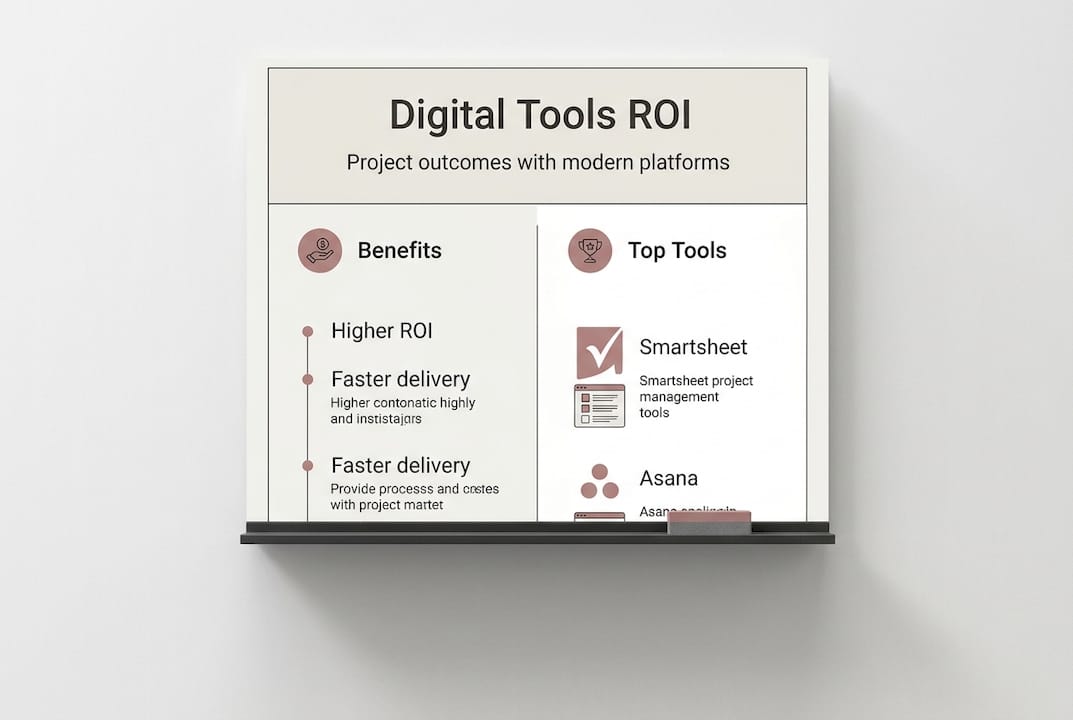
Here's how leading tools compare on key metrics:
| Tool | Three-Year ROI | Payback Period | Key Differentiator |
|---|---|---|---|
| Smartsheet | 680% | 6 months | Enterprise-grade flexibility and integrations |
| Cora PPM | 187% | 12 months | Advanced portfolio management capabilities |
| Asana | $600k-$800k annual savings | 8 months | Intuitive interface and rapid adoption |
How these tools enhance team collaboration and workflow efficiencies:
- Centralized communication eliminates information silos and reduces email overload
- Automated workflows trigger notifications and handoffs without manual intervention
- Real-time dashboards give stakeholders visibility without status meetings
- Template libraries standardize processes while allowing team customization
- Integration ecosystems connect project management with existing business systems
Pro Tip: Select tools based on your largest pain point rather than feature lists. If communication breakdowns cause most delays, prioritize collaboration features over advanced reporting.
The project management solutions market offers hundreds of options, making selection overwhelming. Focus on platforms that match your team size, methodology preference, and technical ecosystem. A tool that works brilliantly for a 20-person startup may frustrate a 500-person enterprise with complex approval chains.
Successful tool adoption requires more than purchasing licenses. You need executive sponsorship, dedicated training time, and champions who help teammates overcome resistance. The organizations achieving 680% ROI didn't just deploy software; they transformed how people collaborate and make decisions. Start with pilot teams, gather feedback, and refine your approach before rolling out company-wide.
These collaboration tools overview demonstrate that technology investment pays dividends when aligned with clear business objectives and supported by change management.
Addressing common project management challenges in complex enterprises
Even with solid methodologies and powerful tools, enterprise projects fail at alarming rates. Understanding why initiatives derail helps you implement preventive measures before problems escalate.
Agile projects fail due to backlog chaos, weak ownership, and dependencies; hybrid suits complex enterprises. Teams accumulate hundreds of backlog items without clear prioritization, creating analysis paralysis. Product owners lack authority to make decisive trade-offs, leading to scope creep and competing priorities. Cross-team dependencies become bottlenecks when coordination mechanisms don't exist.
Main causes of failures in enterprise projects:
- Unclear success criteria that shift as stakeholder opinions change
- Resource constraints that spread team members too thin across initiatives
- Technical debt accumulation that slows delivery velocity over time
- Poor risk identification that leaves teams blindsided by predictable issues
- Inadequate stakeholder engagement that results in late-stage requirement changes
Mitigation tactics for these common pitfalls:
- Implement strong governance with clear decision rights and escalation paths
- Assign dedicated product owners with authority to prioritize ruthlessly
- Establish real-time issue gating that surfaces and resolves blockers daily
- Practice adaptive leadership that adjusts approach based on emerging patterns
- Conduct regular retrospectives that turn lessons learned into process improvements
Edge cases include scope creep and resource constraints; solutions are real-time gating, robust planning, adaptive leadership. Scope creep happens when teams say yes to every request without evaluating impact. Resource constraints emerge when organizations launch more initiatives than their capacity supports. Both require disciplined trade-off decisions backed by data.
Planning and leadership become critical when projects face uncertainty and complexity. Organizations that invest in upfront risk assessment and empower leaders to make adaptive decisions achieve significantly higher success rates than those that rigidly follow initial plans regardless of changing conditions.
Hybrid methodology advantages shine in complex enterprise environments where pure Agile or Waterfall approaches create more problems than they solve. You get structured phase gates for governance and stakeholder alignment combined with iterative delivery that responds to feedback. This balance prevents both the rigidity that kills innovation and the chaos that destroys accountability.
These project risk management practices transform how organizations anticipate and respond to challenges. The difference between proactive and reactive project management shows up in your delivery track record and team morale.
Explore Zennendo for evolved project management
You've learned how methodology selection, digital tools, and risk mitigation combine to drive project success. Now it's time to see these principles in action through a platform built for modern enterprise needs.
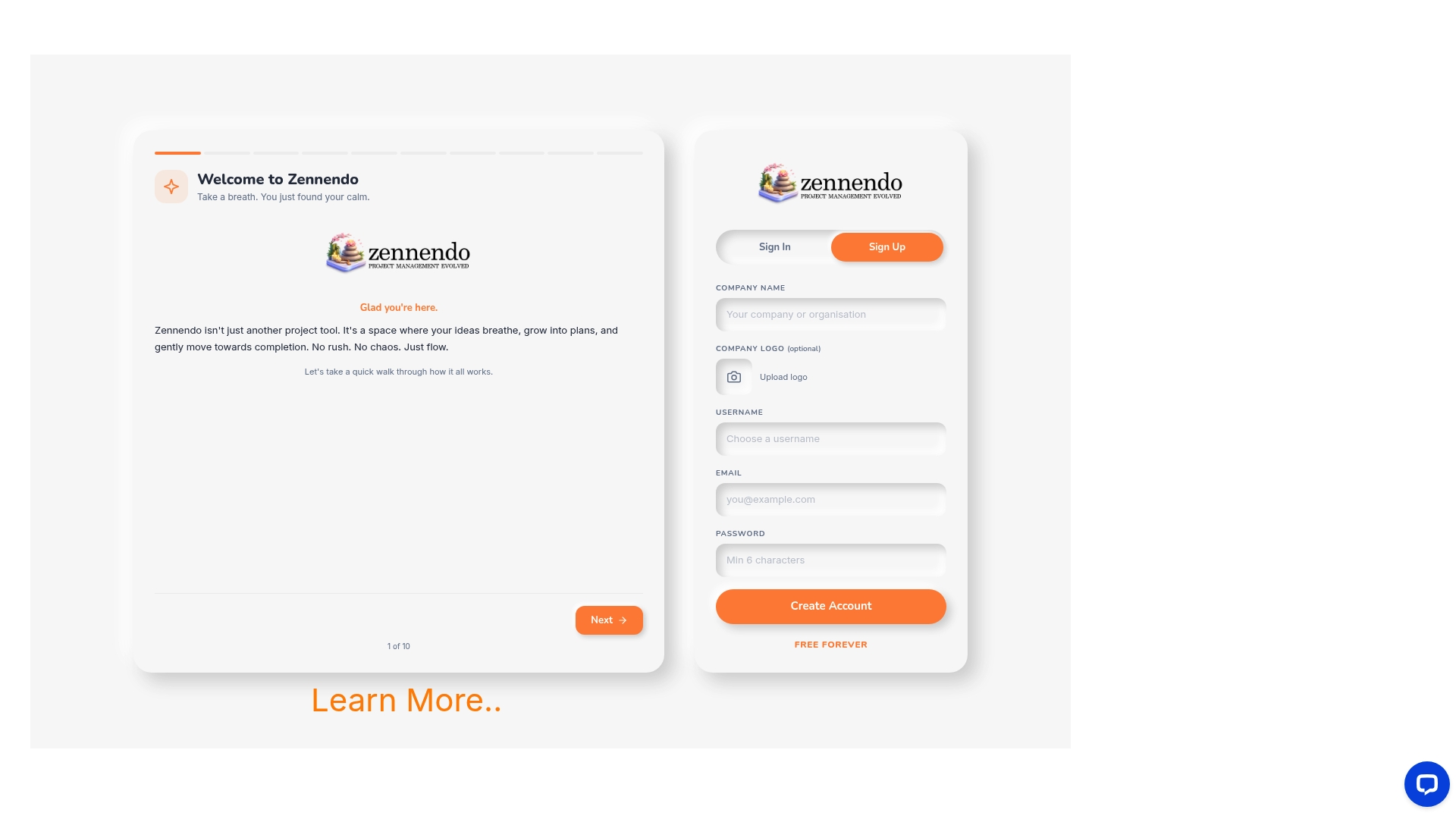
The Zennendo project management platform integrates hybrid and SAFe methodology support, giving you flexibility to match your approach to each initiative's unique requirements. Teams working on predictable deliverables use structured workflows while innovation projects leverage iterative cycles.
Key features that enhance enterprise project delivery:
- Workflow automation eliminates manual handoffs and accelerates delivery cycles
- Real-time collaboration tools keep distributed teams aligned across time zones
- Strong governance frameworks maintain visibility and accountability at scale
- Customizable dashboards surface the metrics that matter to different stakeholders
- Integration capabilities connect with your existing technology ecosystem
Explore Zennendo product details to see how organizations like yours streamline complex initiatives while maintaining the oversight executives demand. The platform scales from small teams to enterprise-wide deployments without sacrificing usability or performance.
Check Zennendo pricing plans to find the right fit for your organization's size and needs. Transparent pricing eliminates surprises while flexible options accommodate growth. Many teams start with pilot programs before expanding to additional departments as they prove value.
Leveraging proven digital tools that embody project management best practices accelerates your path to measurable results and competitive advantage.
Frequently asked questions about project management
What is the best project management methodology for large enterprises?
Hybrid and SAFe methodologies work best for large enterprises managing complex initiatives with multiple teams. Hybrid combines Waterfall's governance with Agile's adaptability, while SAFe provides structured coordination mechanisms that keep dozens of teams aligned.
How can digital tools improve project delivery efficiency?
Digital tools centralize communication, automate workflows, and provide real-time visibility that eliminates status meetings. Organizations using platforms like Smartsheet achieve 680% ROI through faster delivery, reduced waste, and better resource allocation enabled by data-driven decisions.
Why do Agile projects sometimes fail and how can that be prevented?
Agile projects fail when teams lack clear ownership, accumulate chaotic backlogs, or ignore cross-team dependencies. Prevention requires dedicated product owners with decision authority, ruthless prioritization discipline, and coordination mechanisms that surface blockers before they cause delays.
What are the benefits of hybrid project management?
Hybrid project management balances structured planning with iterative execution, making it ideal for complex enterprises. You get predictable milestones for stakeholder confidence while maintaining flexibility to adapt as requirements evolve, reducing both risk and rigidity.
How does SAFe support coordination across multiple teams?
SAFe introduces Program Increment Planning sessions that align team sprints, Agile Release Trains that organize around value streams, and shared ceremonies that maintain transparency. These mechanisms prevent integration nightmares while preserving team autonomy and delivery speed.